Google Pixel 8 Pro: A Real-World Critical Review

Google Pixel 8 Pro: A Real-World Critical Review
The Google Pixel 8 Pro is arguably the most ambitious phone Google has ever made, attempting to shift the definition of a smartphone from raw hardware capability to adaptive AI integration. Now that the phone has been in the wild for some time, a critical consensus has emerged regarding how these lofty goals translate to everyday use.
Design: The Polish that Matters (and One Strange Addition)
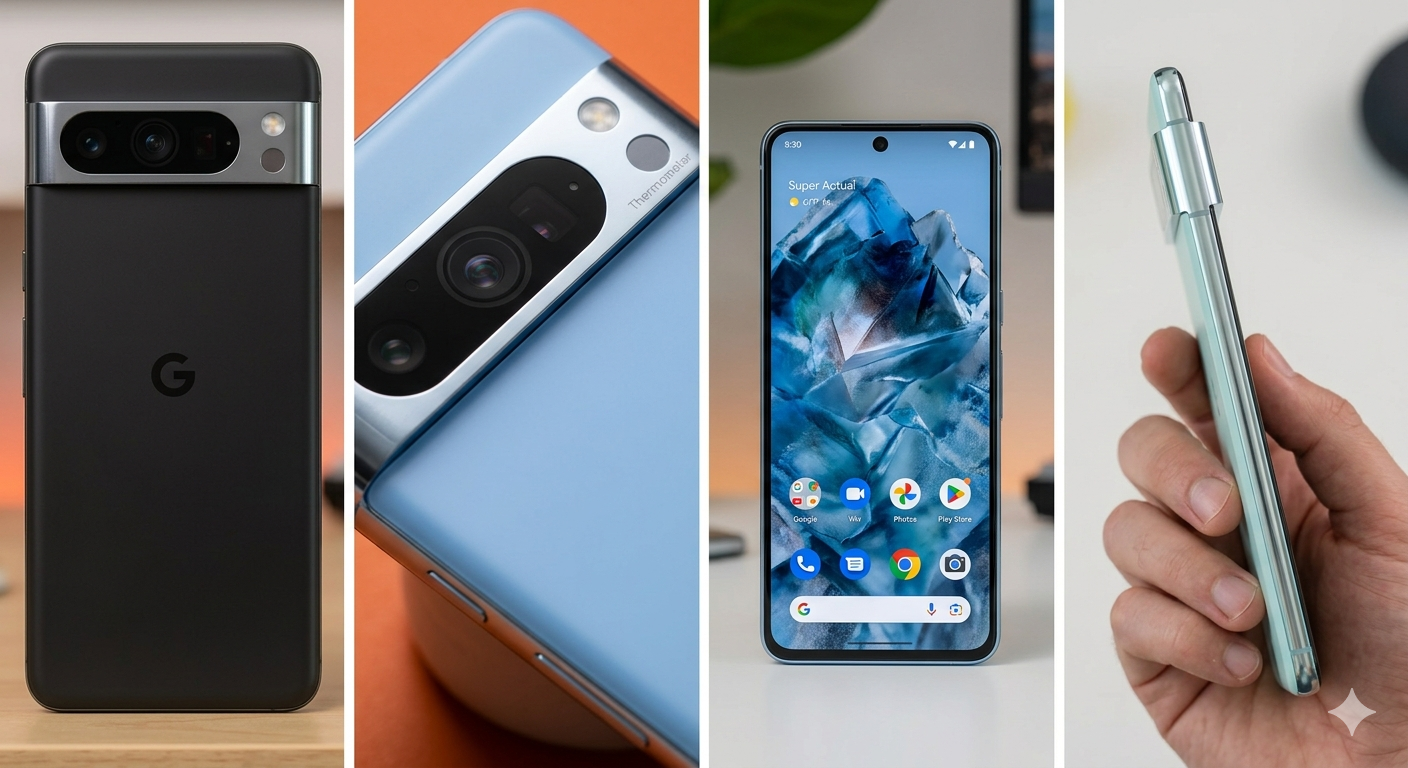
Visually, the Pixel 8 Pro is a success. It significantly improves upon the design language of its predecessors. By finally moving to a completely flat display and softening the rounded corners, Google has eliminated the awkward palm rejections and glare of the Pixel 7 Pro. Users laud the “gorgeous matte back glass,” which resists fingerprints better than glossy panels and feels genuinely premium.
The unique polished aluminum camera bar, now with all three lenses consolidated into a single pill-shaped cutout, remains distinctive. However, the much-publicized integrated temperature sensor is widely considered a gimmick. Users online frequently report that it is “fiddly to use” and “not useful for medical readings,” often asking why Google included it.
Performance: The Tensor Dilemma
This is where user experience diverges the most. The Pixel 8 Pro is powered by Google’s custom Tensor G3, which is designed for AI tasks rather than raw benchmarks.
- Pros: Daily use is incredibly smooth. The UI feels fluid on the brilliant 6.7-inch Super Actua display. Exclusive AI features like Call Screen, Audio Magic Eraser, and Magic Editor work exceptionally well and provide actual utility, cementing the Pixel’s reputation as the “smartest” smartphone. Google’s 7-year software update promise is a massive selling point that sets the standard for longevity.
- Cons: Power users and gamers are critical. The Tensor G3 is “not competitive” with top-tier Snapdragon or Apple chips in sustained performance or efficiency. While thermal management is improved over the Pixel 7, the phone still gets “worryingly warm” under heavy gaming or video recording. The battery life is merely “average,” usually getting most people through a day, but it is not a two-day phone, and its 30W charging speed is now painfully slow compared to Chinese competitors.
Camera: The Computational King Defends Its Crown
The core reason people buy Pixels remains its camera system, and the Pixel 8 Pro delivers.
- Hardware: It finally features true Pro Controls, allowing manual adjustments (ISO, Shutter Speed, etc.)—a long-awaited addition. The upgrade to 50MP/48MP/48MP sensors across the board means that the quality is consistent regardless of which lens you use. The 5x optical telephoto is sharp, and its Super Res Zoom (up to 30x) produces remarkably usable images, beating rivals in stabilization and detail retention.
- AI Integration: The new Video Boost feature promises to apply Pixel-quality HDR and processing to video for the first time. However, this is critically received: it requires uploading the video to Google’s servers, and users report that “it takes hours to process,” making the feature too inconvenient for many. Features like Best Take are clever but can sometimes produce unnatural artifacts.
The Verdict
The Google Pixel 8 Pro is a mobile photographer’s dream and a brilliant showcase of thoughtful software integration. If you prioritize useful daily assistants (AI call screening, live translation) and the longest-supported software experience over raw speed and battery endurance, it is excellent.
However, if you are a demanding user who relies on phone benchmarks for productivity or gaming, or if you expect ultra-fast charging, you will find the performance compromises of the Tensor G3 and the slow charging speeds to be significant drawbacks.
Core Consensus Score: 4/5 – Excellent, but not for everyone.